

The First Mountain Hike
(Work In Progress...)
The Iron Knee & The Copper Spark
2022

The Threshold:
In the late summer of 2022, as the days lingered in the north and the first whispers of autumn began to weave through the air, I embarked on my inaugural pilgrimage into the mountains, starting in Abisko. A woven pack digging into my shoulders, heavy with the hopes and burdens of what I carried, and a canvas shelter intended to shield me from the unpredictable northern night. Each survival tool had been carefully selected before my departure, now pressing its weight upon me, stirring both anticipation and apprehension. Would my gear withstand the trials of the wild peaks, or would it betray me at a critical moment? Our goal was to hike from Abisko Turiststation through the national park to Unna Allakas, then to Abiskojaure, and back to Abisko Turiststation.
Unaware of the fates that awaited me on this trail, I pressed onward, a soul untested by such journeys. Yet, the path quickly became my stern teacher, imparting wisdom forged in the crucible of solitude. Stepping away from the comfort of my daily routines and into the wild, I found myself anchored in the present moment. The anxieties I carried from everyday life felt small and irrelevant here. Surrounded by rock, wind, and the shifting sky, I felt those concerns begin to loosen their grip on me. The mental noise faded as I focused entirely on practical matters: each step over uneven ground, the weight of my backpack pressing on my shoulders, and the need to follow trails that led deep into the unknown. In this wilderness, my mind had no choice but to be present, drawn away from imaginary fears and centred on the raw experience unfolding before me.
In this wild expanse, where the ancient Jötnar—giants of stone and time—whispered secrets long forgotten, their voices woven into the wind and echoing across empty slopes, I felt their presence rise from the land itself. In Norse mythology, the Jötnar embody the raw, untamed forces of nature and endurance, often seen as rivals to the gods. For those familiar with these northern legends, they symbolise both the hardships and the awe-inspiring aspects of the landscape. In moments of solitude, their history of survival in a harsh world mirrored my own struggles, igniting something ancient within me and reminding me that transformation often emerges from challenge. In those moments, the mythic and the personal intertwined, revealing that the giants' sagas were not just tales but reflections of a journey filled with courage and change.
It felt as if I had crossed into a shadowed realm where the old gods once roamed, waiting for me to step over the threshold and leave everything behind to gather fragments of myself anew—treasures unearthed in hardship, unknown before this crossing, like a fading ember flaring back into the sacred fire of spirit. The burdensome yoke of daily life, the pressure to conform to social norms, and the relentless comparisons with others all felt like unnecessary weights that had weighed me down in civilisation. But as I walked those mountain trails, the only burden that remained was the tangible heft of my pack, a reminder that true strength is forged through struggle. Carrying that weight became more than just a physical challenge; it was a test of resolve. With each mile, I learned that enduring hardship—whether on the trail or in life—builds resilience. Strength is not the absence of burdens but rather the ability to carry them and discover just how much one can bear.
My focus shifted entirely to where to place my feet on the terrain, and the beauty of the mountains made me forget the mundane problems I once faced.
The Ordeal of the Ascension:
As dusk fell on the first day, the gates of our initial refuge opened, and I felt a warrior's gratitude—the taste of hard-won shelter and well-deserved rest. When I finally removed my backpack and prepared to change into my camping shoes, I dreaded the moment I would take off my soaked, sweaty socks. I expected to find my skin torn and raw, as the stinging and burning pain forced me to limp. To my relief, my skin was intact, though the beginnings of blisters formed between some toes. The pain made walking difficult, and I feared we would have to cancel the hike if my condition didn’t improve by morning. Thankfully, a night's sleep in the tent provided sufficient recovery; my feet still hurt, but I could endure.
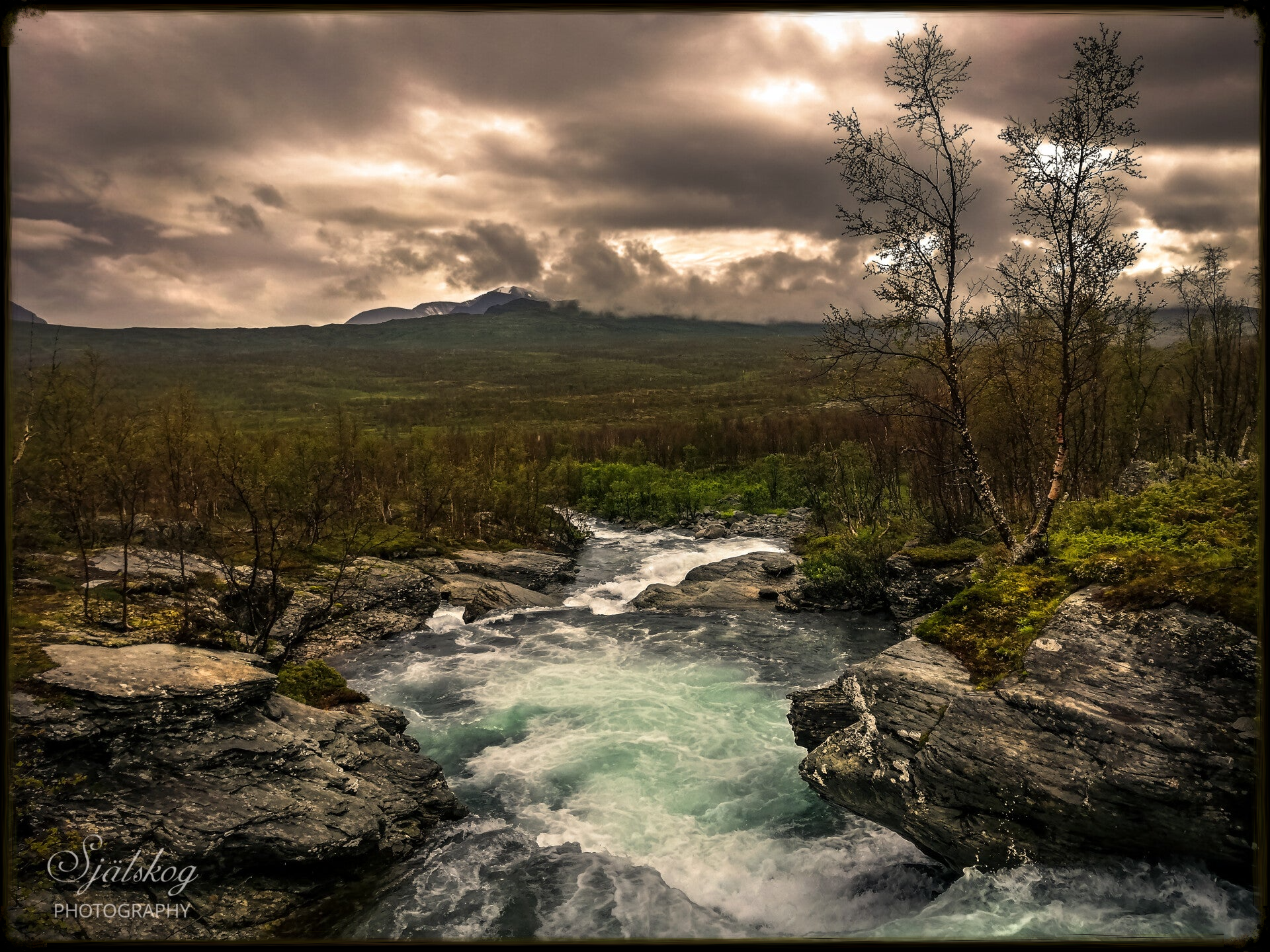
The march the following day felt endless, a trial beneath the stars and clouds as we sought sanctuary. By the banks of a raging river, whose roar echoed the voices of ancient gods, we paused, searching for a bridge that had long vanished. With no choice but to press onward, we eventually found solid ground to rest. We lingered at the water's edge, allowing the river's rush to fill the silence between us. I turned to my companion and admitted, "I didn't expect it to be this hard." The words felt strange, laid bare in the wild air. My companion offered no reply, merely a nod, as if silence itself had become our shared language in this vast wilderness.
I paused to watch the swirling water, feeling the weight of every ache. In that moment, I pondered what had truly driven me onto this path. Was it merely a thirst for adventure, or a deeper yearning to peel away the layers I carried in my daily life? The questions hung in the mist, unanswered, as I shouldered my pack once more.
Supper arrived in the witching hour. As I finally settled into my canvas hall, bliss washed over me, easing the exhaustion, while the river's chant, like a seiðkona's spell sung from the dawn of time, lulled me into dreams. I cared not whether it was spirit or wind that enveloped me; sleep claimed me as the old world whispered around our camp.
Mornings brought a promise of good weather. Today, we will reach Unna Allakas. Just minutes into our hike, after nearly getting stuck in the mud, I felt my right knee reach its limit. Suddenly, with no warning of injury, the tendon at the front of my knee felt as if a knife were stabbing me with every lift. The unexpected pain bewildered me; I had no memory of injuring my knee, nor any history of issues with it. My heart sank. There was no way I could continue hiking with such pain. I limped for the remaining hours to Unna Allakas. The thought of not completing my first hike was devastating, a cruel twist of fate. Just when I was starting to enjoy myself, something had to go wrong. I tried to pause, rest, stretch, and see if my knee needed "popping," but nothing I did made a difference. As I limped along the trails, tears fell—not from pain, but from the fear that my journey was ending too soon. Upon reaching Unna Allakas, we decided to take two days off to rest my knee, hoping it would improve.
The next day, it had not; I still limped, but at least the pain was no longer sharp, like a knife through my knee. I refused to let this discomfort ruin my hiking adventure. I noticed that the pain was worst at the beginning of each hike, but it seemed my brain eventually stopped sending pain signals after a few hours of walking, as I had learned to ignore them. I worried that hiking with a heavy backpack in mountainous terrain for several more days might cause permanent damage, yet today my right knee is completely pain-free. While in Unna Allakas, we took a day hike to Sjangeli, an old abandoned copper mine.
The Unseen Glimpse:
This section reflects on an often-overlooked aspect of my journey—the way I observed and experienced the landscape beyond mere physical endurance or achievement. Here, I explore my initial encounters with the art of seeing and how capturing fleeting moments in the wild shaped my perspective long before I truly embraced photography.
I was not a photographer during my very first hike. Of course, I took photos with my mobile phone and enjoyed capturing the scenes, but my real interest in photography had not yet begun.
The Summit of Reflection:
There was a moment on the trail when the pain in my knee made me want to give up entirely. I remember standing on a rocky outcrop, the wind stinging my face, as I watched the path twist far ahead through mist and stone. I wanted to stop—to surrender to the ache and fatigue. Instead, I took one more step. The simple act of refusing to turn back, despite the doubts gnawing at me, revealed something I had not known before: I am stronger than the voice that says, 'give up.' This hike taught me not only to embrace challenges but also to live with doubt, to keep moving through pain and fear until I emerged transformed on the other side. Nature has a way of throwing challenges at you to yield the most rewarding experiences that will stay with you for a lifetime. Even when I felt like giving up due to pain and exhaustion, I persevered to reach that peak. Something within me awakened, as if my spirit finally came alive, fulfilling its purpose: to grow, climb, learn, and always challenge myself.
The Relic:
From the ancient ruins of Sjangeli, I returned home with relics: raw copper stones, their surfaces shimmering green with the passage of time, and others dense with iron, drawing the compass needle like a mystical rune. These were not mere keepsakes; they were talismans, shaped by the earth's deep memory—a testament to the journey that had transformed me. Hardened by challenges, I too carried a new light within—a mysterious spark, green-blue like the northern lights, symbolising a transformation worthy of legend.
As I held those stone fragments, I recognised how they mirrored the changes within me: just as the minerals unveiled hidden beauty through pressure and time, I returned home with a newfound sense of inner strength and confidence. The true relic I brought back was not merely the copper in my pack, but the enduring belief that I could withstand, adapt, and emerge changed by what I once feared. In essence, these physical mementoes became reminders of my resilience and growth, proof that stepping beyond my limits gifted me something far more precious than what I initially sought.